
Stop 6: The Final Sub-Edit
Many months later... what’s changed?

Roughly a year ago, the Edits on the Record team acquired a manuscript about the author’s relationship to Sylvia Plath, and how it led her to write a thesis on the legacy of eating disorders in women’s poetry. At least, that’s what I’ve always seen as the heart of the manuscript. Over the past 12 months, through all the various additions and subtractions, all the changes in formatting and structure and style, Jessica’s sisterhood with Sylvia has always felt like the center point, and the connective tissue, that held this manuscript together. And after all these months, we’ve finally reached what is likely the final edit of the manuscript. We’ll be taking it to copy edit after the holidays, and then, finally, publication. It’s been a long, winding, rewarding road. Where did it take us, and why is this its endpoint? Let’s discuss.

This manuscript began as Jessica’s thesis. During the acquisitions process, we were of course drawn to her brilliant analysis of the role disordered eating plays in Plath’s work, but also to her reflections on her personal life. As you’ll see when reading, Jessica’s voice is sharp, insightful, unique, and intoxicating; she draws you in easily and keeps you there. We wanted her to be able to embrace this aspect of her writing, as it wasn’t very present in her thesis due to the writing style of an academic thesis. Our vision for the manuscript was a blend between a memoir and an analysis of Plath, or a memoir through the lens of an analysis of Plath. This allowed Jessica to bring much more of herself into the manuscript, and then required us as editors to find a balance between all the research she put into her thesis and the addition of her personal reflections.
In this process, the scope of the manuscript continuously ballooned. There were so many different themes and thoughts Jessica was exploring. In each iteration of the manuscript we received as she wrote more and more content, and though all of it was interesting, the amount of ground Jessica was covering made the manuscript feel muddled and confusing. It was generally easy for us editors to follow because of how much time we had spent with it, but there were definitely areas that dragged or felt disconnected from their chapters. Our beta readers echoed this criticism, and as this was their first time reading the manuscript, they were able to point us towards specific places in the manuscript that readers would struggle with. Everyone generally liked the content they read; the issue was making it all flow together in a way that made sense to readers and kept their interest.
When we editors got together to discuss the feedback from our beta readers, we decided to try breaking the manuscript up into significantly shorter chapters. The version of the manuscript that our beta readers read had been split into five chapters, but it was hard to pin down a main theme or topic for each chapter. For the post-beta-reader sub-edit, we split the manuscript into fourteen chapters, plus an epilogue and a prologue. With this format, each chapter had a specific focus. Ideas that got lost in the shuffle of the large chapters of earlier versions of the manuscript were now crystallized in their own chapters.
If you read our blog post on the beginning of the substantive editing process, you might remember our visualizations of the manuscript’s narrative structure. The manuscript began somewhat jumbled, a pile of interesting, intermingled ideas and analyses that readers might struggle to navigate. Our goal was always to untangle this structure, and allow these ideas to function as paths the reader can follow that are all connected by the larger themes Jessica is working with.
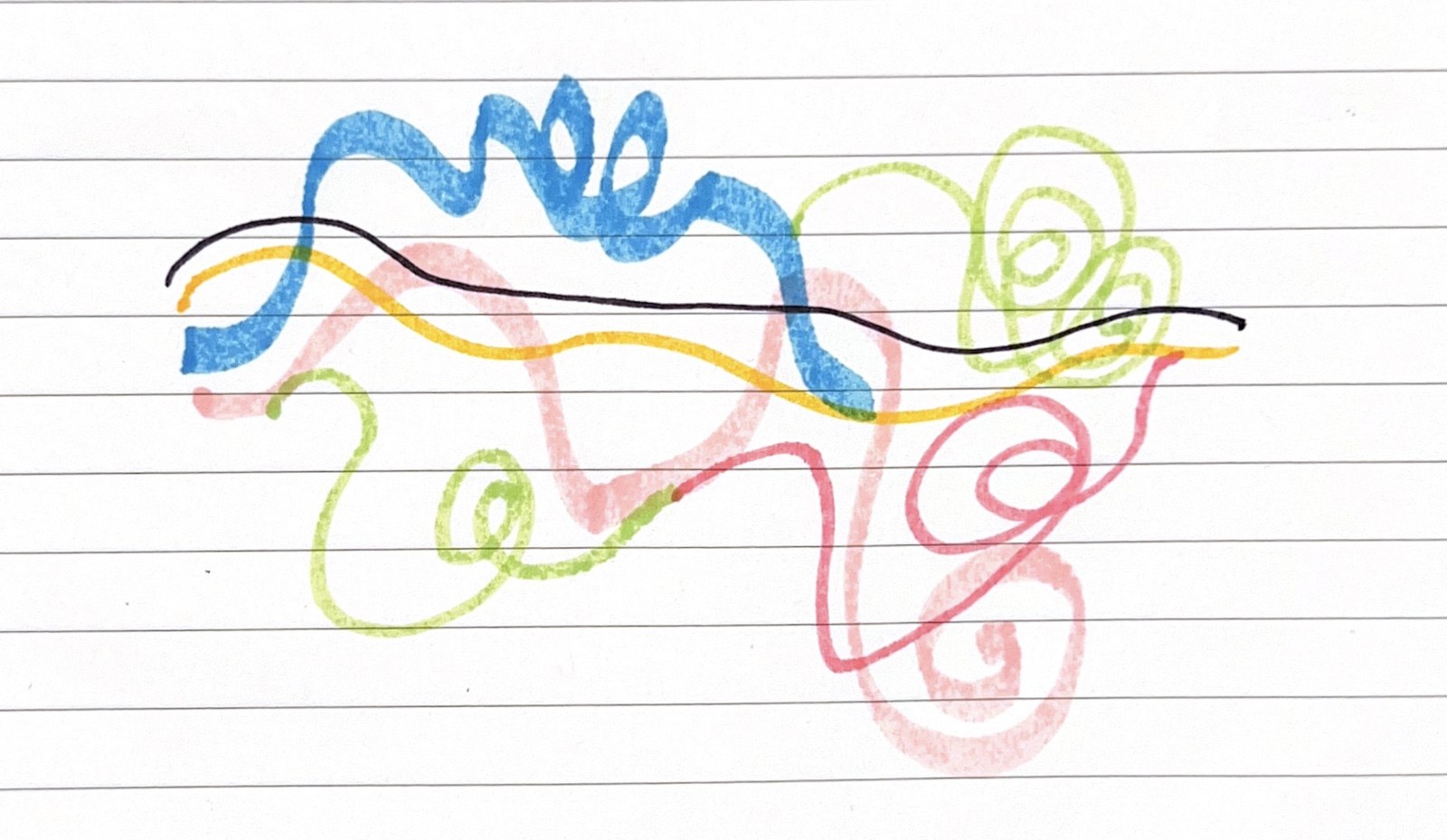
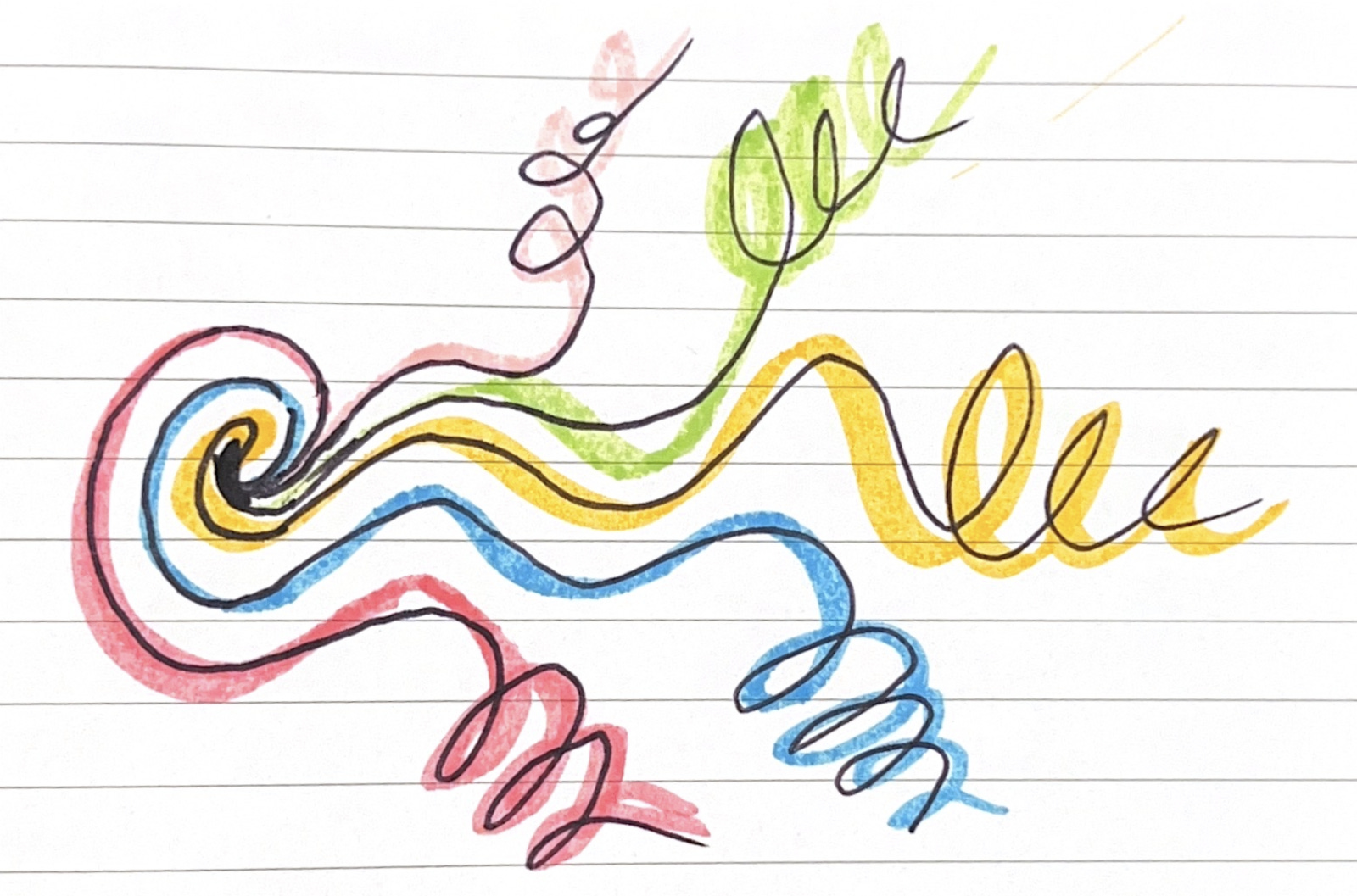
The shorter chapters in the manuscript allow the narrative structure to look more like the visualization on the bottom, with each colored “tentacle” representing a different chapter, each with its own primary idea. They’re all connected as aspects of Jessica’s exploration of the artistic sisterhood in her relationship with Plath, but their separation makes the individual arguments much easier to follow.
This version of the manuscript marks the end of our substantive editing process. It’ll soon be sent off to a copy editor, who will review the basics of the writing, checking for grammar, punctuation, spelling, and so on. From there, we’ll head to printing and publication. I’ve been working on this project for over a year now, and it has been such a great experience from start to finish. Watching this manuscript evolve, and helping it evolve, has been so rewarding, and I am so excited for you to be able to read it in its final form in the coming months. Signing off for now, and happy new year!